
Morocco Solar Eclipse 2027: Totality Path, Timing & Travel Guide
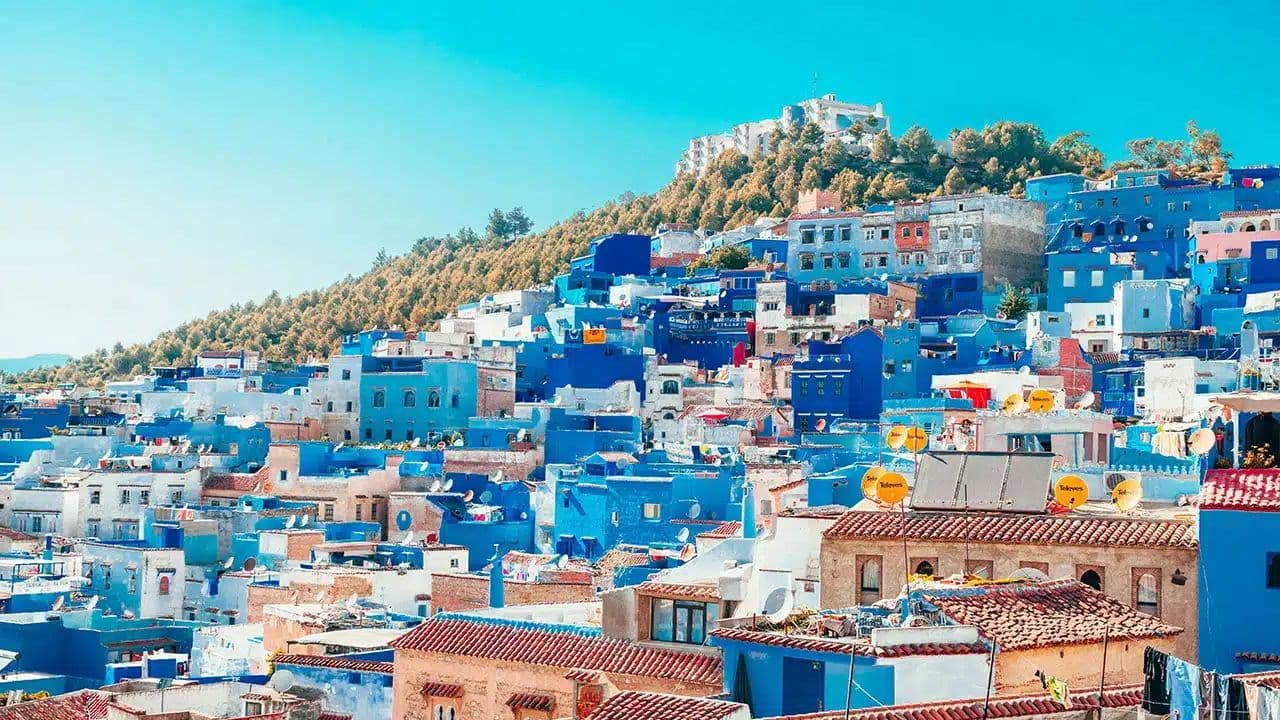
Where in Morocco Is the Eclipse Total?
The path of totality enters Morocco from the Atlantic and crosses the whole north, from the Strait of Gibraltar along the Mediterranean coast and the Rif to Nador and the Algerian border. The closer you are to the centre line, the longer totality lasts. The figures below come from eclipse calculators based on NASA and JPL ephemeris data. Expect differences of a few seconds between sources, and always check the exact spot you plan to stand on.
Why 99% is not the same as 100%
A 98% partial eclipse in Fes or Rabat is interesting, but it is not the event. The sky only goes dark, the temperature only drops sharply and the corona only appears when the Sun is fully covered. If you are travelling for this eclipse, make sure you are inside the path of totality on the morning of 2 August.
| Place | Eclipse type | Totality (approx.) | Notes |
|---|---|---|---|
| Martil and M'diq | Total | 4 min 54 s | Longest totality in Morocco, beach towns 10 km from Tetouan |
| Tangier | Total | 4 min 52 s | About 08:44:44 to 08:49:36; Sun about 38° high |
| Tetouan | Total | 4 min 52 s | Inland city, a backup if the coast is misty |
| Fnideq | Total | 4 min 52 s | Next to the Ceuta border |
| Asilah | Total | 4 min 46 s | Atlantic town 45 km south of Tangier |
| Al Hoceima | Total | 4 min 28 s | Mediterranean coast, far from the crowds of the Strait |
| Larache | Total | 4 min 20 s | Atlantic coast, near the southern edge of the path |
| Chefchaouen | Total | About 4 min 15 s | About 08:45:28 to 08:49:43; mountain town, inside the path |
| Nador | Total | 4 min 17 s | Eastern Mediterranean coast |
| Oujda | Total | About 1 min 9 s | Very close to the edge of the path |
| Rabat / Fes / Casablanca | Partial | None | About 97–99% of the Sun covered |
| Marrakech | Partial | None | About 89% covered |
| Merzouga (Sahara) | Partial | None | Far south of the path |
Eclipse Timeline in Tangier
The whole eclipse lasts a little over two hours in Tangier. The partial phase starts with a small "bite" out of the Sun and grows for about an hour before totality.
If you are coming over from Spain for the day, remember that Morocco is two hours behind mainland Spain and one hour behind UK summer time on that date. Totality in Tangier at 08:44 Morocco time is 10:44 in Tarifa.
| Phase | Time in Tangier (Morocco time, GMT) | What you see |
|---|---|---|
| Partial eclipse begins | About 07:40 | First contact; glasses on |
| Light changes | About 08:30–08:44 | Shadows sharpen, light turns silvery, air cools |
| Totality begins | About 08:44:44 | Glasses off; corona, planets and brightest stars appear |
| Maximum | About 08:47 | Middle of totality |
| Totality ends | About 08:49:36 | Glasses back on at the first flash of sunlight |
| Partial eclipse ends | About 10:00 | Last contact |
Where Should You Watch the Eclipse in Morocco?
There is no single best spot. The right choice depends on how you balance totality length, crowds, morning cloud and the rest of your trip.
Tangier and Cap Spartel
Tangier has the best mix of totality length, hotels, an international airport and the ferry port. Its west side and the Cap Spartel area give open views over the Atlantic. The Sun will be in the east-southeast at about 38° above the horizon, so you do not need a sea view in that direction, only a clear sky above a rooftop, beach or field. The downside is crowds. Expect the city, the ferries from Tarifa and Algeciras and the roads to Cap Spartel to be very busy that morning.
Martil, M'diq and the Tetouan coast
This stretch of the Mediterranean coast gets the longest totality in Morocco, a few seconds more than Tangier. It is also a popular Moroccan summer beach area, so hotels fill up early in August with or without an eclipse. Tetouan itself, a few kilometres inland, is a useful backup if sea mist sits on the beaches.
Chefchaouen and the Rif
Chefchaouen is inside the path of totality with about 4 minutes 15 seconds, a little less than the coast. It is high in the Rif mountains, away from coastal mist, and much calmer than Tangier. For many travellers it is the best balance between a full total eclipse and a relaxed morning. Book early: the town is small and is already one of Morocco's busiest destinations in summer.
Asilah, Larache and the Atlantic coast
Asilah has nearly the same totality as Tangier with a fraction of the people. Larache is close to the southern edge of the path, so its totality is shorter and depends more on your exact location.
Choose your viewing spot by its distance to the centre line, not by the town name. Two points 10 km apart can differ by 20 seconds or more of totality near the edges of the path.
What Will the Weather Be Like?
August in northern Morocco is dry, warm and usually sunny, which is one of the reasons this eclipse is so attractive. The main risk around the Strait of Gibraltar is not rain but low cloud and mist. When the easterly Levante wind blows, humid air can form a layer of low cloud or haze over the coast in the early morning, while inland valleys and the Rif stay clear.
This is why mobility matters. On a private trip your driver can check the forecast and satellite images the evening before and early in the morning, then move you inland or along the coast to clearer skies. With a fixed bus tour or a single hotel rooftop you cannot do that.
| Area | Typical early August conditions | Main risk on eclipse morning |
|---|---|---|
| Tangier and the Strait | Warm, around 20°C at dawn and high 20s °C by midday | Morning mist or low cloud with the Levante wind |
| Martil / Tetouan coast | Warm and humid | Coastal haze; inland Tetouan often clearer |
| Chefchaouen and the Rif | Clear, cooler mornings | Little; occasional haze |
| Asilah / Larache | Mild Atlantic mornings | Atlantic fog banks |
How to Plan Your Trip
When to book
Book hotels in the path of totality as early as you can. Early August is already peak season in northern Morocco: it is Moroccan summer holiday time, and many Moroccans living in Europe return home through the ports of Tangier Med and Tangier Ville during the summer. The eclipse will add thousands of visitors on top of that. Flexible rates and confirmed transport matter more than usual.
Getting there
Tangier Ibn Battouta Airport has direct flights from many European cities. The ferry from Tarifa to Tangier Ville takes about an hour, but ferries from Spain will be extremely busy in early August, so book tickets and arrive early. If you are already in Morocco, the Al Boraq high-speed train links Casablanca and Rabat to Tangier in a few hours, and Chefchaouen is about 2 hours by road from Tangier and about 1 hour from Tetouan.
On the morning
Plan to be in position by about 07:30, before the partial phase starts. Roads to popular viewpoints may be slow, and you do not want to be in a car at 08:44. Bring water, a hat and sun cream; even in the morning, the August sun is strong.
If you are staying in Chefchaouen, watch from the hills above the town near the Spanish Mosque or from your riad's roof. You avoid the drive and the crowds of the coast.
Eye Safety
Never look at the Sun without proper eye protection during the partial phases. Use eclipse glasses or handheld viewers that meet the ISO 12312-2 standard and buy them from a known supplier before you travel, because demand will be high locally. Sunglasses, smoked glass and phone screens are not safe. Only during totality, when the Sun is completely covered, can you take the glasses off and look with your naked eyes. Put them back on as soon as the first bright point of sunlight returns. Cameras, binoculars and telescopes need a proper solar filter on the front.
What to Do Before and After the Eclipse
Most visitors combine the eclipse with a longer trip. A popular plan is to spend one or two nights in the north for the eclipse, then continue to Chefchaouen, Fes and the Sahara. Our Morocco solar eclipse tour 2027 follows that route: eclipse morning in the Tangier and Tetouan area, the afternoon in Chefchaouen, then Volubilis, Fes and a night under the stars in Merzouga. Be ready for heat in the south: early August afternoons in the Sahara are often above 40°C, so desert time is planned for late afternoon, the night and sunrise. The desert nights are why it is worth it: Sahara stargazing in Merzouga is one of the darkest skies in North Africa.
If you would rather build your own route, see our custom tour page, and read our Morocco weather by month guide for what August is like in each region.
Turn This Guide Into a Private Morocco Route
Frequently Asked Questions
More Morocco Field Guides by Ali Yakoubi
Marrakech head office · 24/7 local support
Plan Your Private Morocco Journey Direct with a Local Team
Tell our Sahara specialists your arrival city, dates, and travel style. Receive a transparent euro quote and day-by-day route directly from our Marrakech office.